SaaS Design
Sales and Client Success teams relied on disconnected tools like monthly Excel sheets, on-demand queries to the Support lead, and external platforms such as PipeDrive to track performance metrics. This fragmented process led to inefficiencies, limited visibility into client data, and difficulty prioritizing accounts. The challenge was to design a unified platform that provided essential metrics, user management tools, and note-taking capabilities while balancing diverse team needs.
Key Achievements:
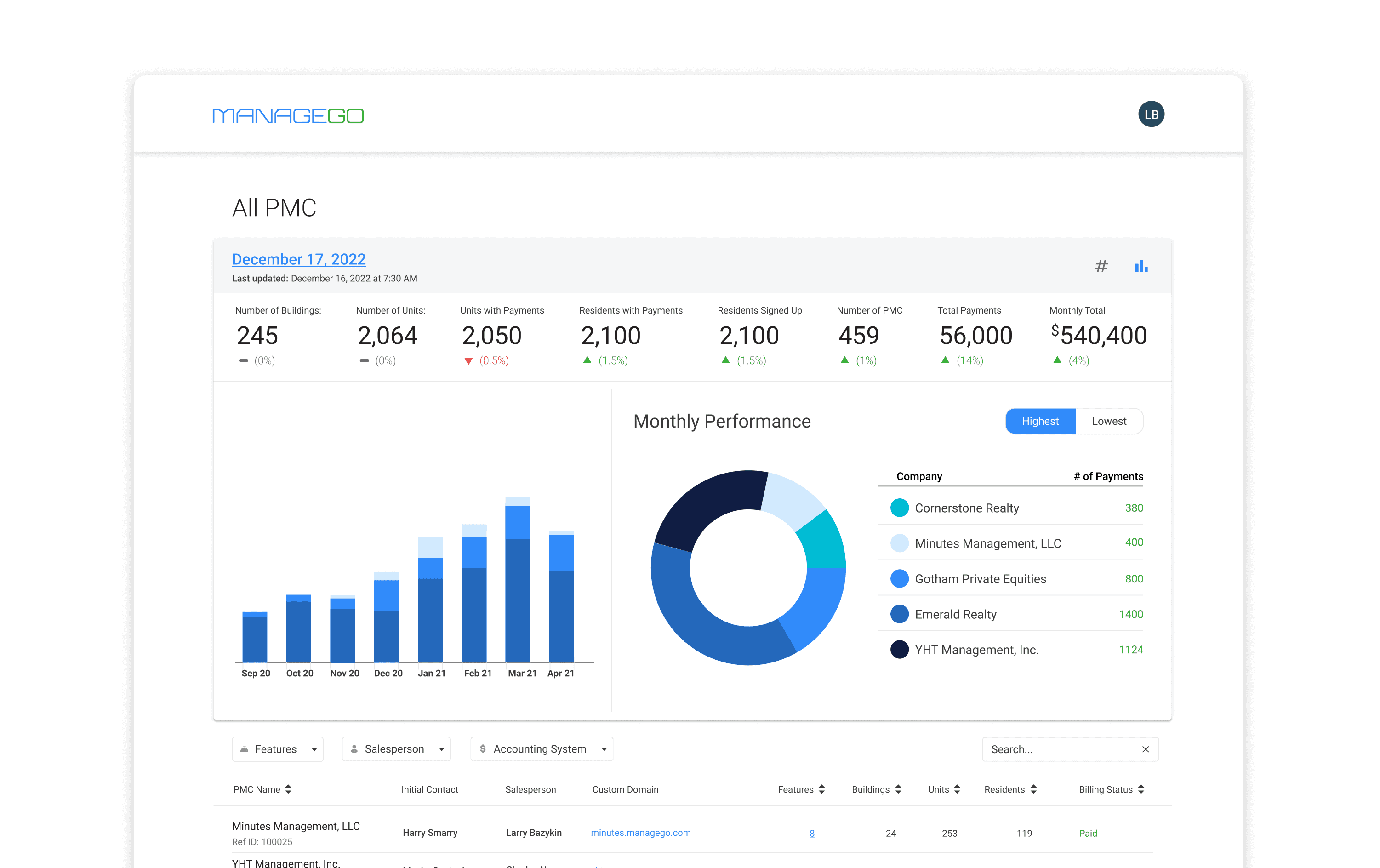
Architected a centralized metrics hub consolidating data from 6+ disconnected sources into a single interface
Designed a toggle-based data presentation system (percentages vs. raw numbers) to serve divergent team needs without UI bloat
Implemented stock-trading inspired data visualization patterns for rapid trend identification
Established foundational design system components later adopted company-wide
Skills Used
Solution
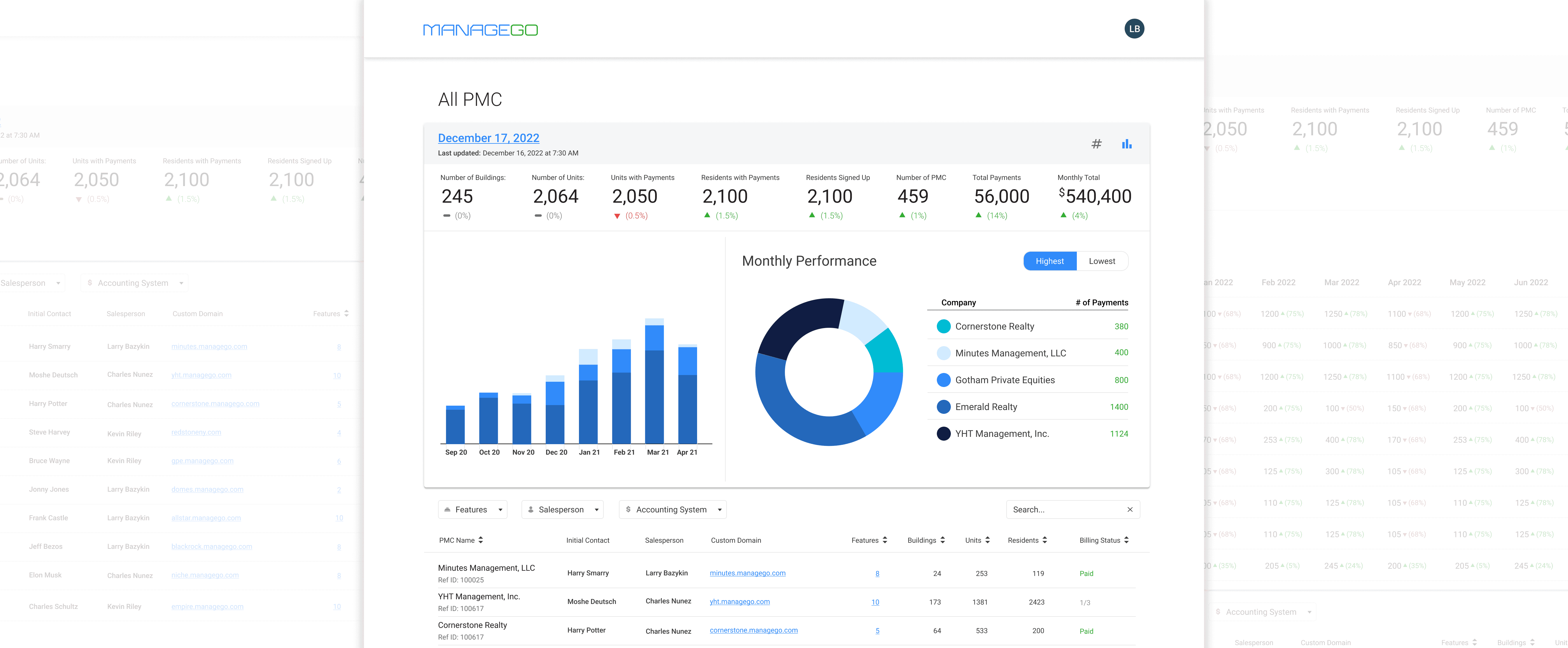
Developed an “At a Glance” feature, providing a global overview of key metrics with the ability to toggle between percentages (for Sales) and raw numbers (for Client Success)
Centralized key performance data such as payments, units, sign-ups, and client-specific users into one intuitive interface
Included customizable notes for Sales to track client interactions and a detailed user directory for Client Success to facilitate direct communication
Adopted a data presentation style inspired by stock trading interfaces, enabling users to easily identify trends and fluctuations.
Refined the platform to align with a larger ecosystem, replacing sidebar navigation with a more cohesive integration
Discovery
Conducted interviews with Sales and Client Success teams to identify critical needs and pain points, then translated insights into actionable personas and user flows
Iteratively designed and tested wireframes, incorporating team feedback to address divergent needs (e.g., percentages vs. numbers)
Built a flexible data visualization system to ensure clarity without overwhelming users
Introduced features like real-time data refresh intervals and streamlined navigation for an optimized user experience