SaaS Design

SaaS Design

Resident Delivery Feature

Resident Delivery Feature

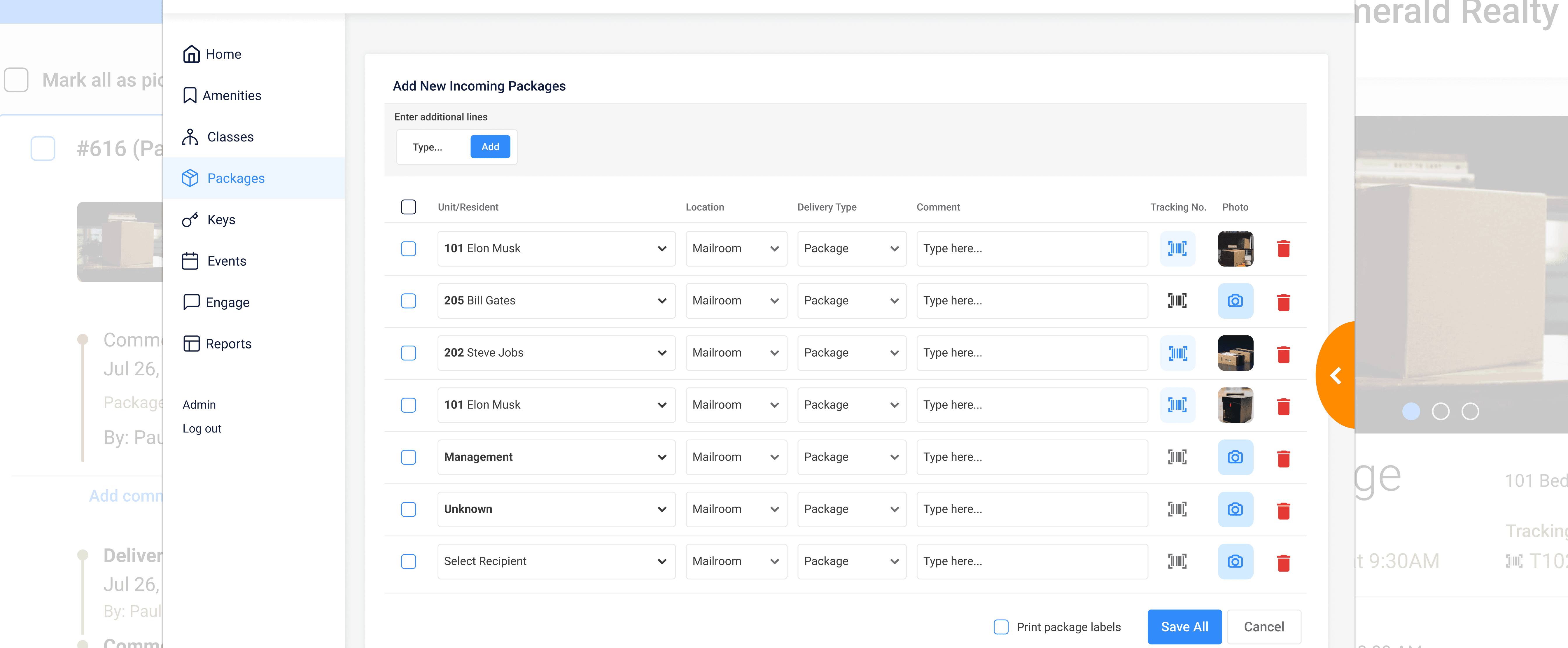
Designed a bulk package logging system processing 100+ daily deliveries per property. Built a dynamic table interface with optional photo capture, cross-device parity, and accordion-based workflow. Reducing front desk logging time while maintaining feature parity across desktop, tablet, and mobile.

Role: Senior UX Designer

Client: ManageGo, LLC

Location: New York City, New York

Completion: December 2022

Role: Senior UX Designer

Client: ManageGo, LLC

Location: New York City, New York

Key Achievements:

  • Built dynamic table system supporting bulk entry of 100+ packages with auto-generated line items


  • Implemented progressive disclosure pattern (accordions) maximizing viewport efficiency

  • Achieved cross-device feature parity while prioritizing optional photo uploads for mobile flexibility

  • Validated usability improvements through iterative testing, accelerating production launch

Skills Used

Accessibility
Adobe Suite
Agentic Engineering
GenAI
HTML/CSS
Information Architecture
Interaction Design
Mixed Reality
Prototyping
User-centered Design
User Research
UX/UI

Design Challenge

Concierge and front desk personnel needed a faster, more efficient way to log incoming and outgoing deliveries, often exceeding 100 packages daily. The current desktop web app’s requirement for photo uploads and its slower workflows prompted users to adopt alternative methods like tablets or mobile devices. Key challenges included creating a seamless experience for bulk package logging, making photo uploads optional, and ensuring accessibility for both staff and residents.


User research, conducted via collaboration with Support and Client Success teams, revealed a preference for mobile solutions and highlighted frustrations with existing workflows. With these insights, personas were created to guide the design toward addressing user-specific pain points, despite the absence of formal user studies.

Solution

  • Built a dynamic table view for bulk package logging, where a new line automatically generates as staff complete the last entry, keeping the workflow moving without extra clicks


  • Made photo uploads optional, giving users the flexibility to use a desktop or mobile camera depending on what is available

  • Added accordions to the logged packages view to maximize viewport and reduce scrolling

  • Introduced a global "Select All" checkbox to speed up package handoffs to residents

  • Designed a resident-facing interface to surface delivery locations, photos, and descriptions, with support for multi-property residents needing building-specific details

Technical Approach

  • Maintained feature parity across all devices while prioritizing optional photo uploads


  • Built a dynamic table system to handle bulk entry efficiently without adding visual complexity


  • Refined the package view during usability testing to include tracking numbers as line items


  • Streamlined mobile and tablet experiences by removing redundant photo-upload prompts

Outcome

The redesigned delivery logging system launched in late 2022 and immediately changed how staff interacted with one of their most repetitive daily tasks. Bulk entry cut down the time it took to log packages, giving staff back time they could put toward residents. Optional photo uploads gave the team flexibility without slowing anyone down, and the updated package view made handoffs noticeably faster.

Usability studies confirmed what the team was already feeling in practice: the new flows were cleaner, easier to follow, and reduced the back-and-forth that came with the old system. Adding tracking numbers to logged items was a small change that made a real difference in clarity for both staff and residents.

The project proved that even under tight time constraints, focused design decisions can meaningfully improve day-to-day operations. The foundation is there. Bringing bulk entry to the mobile and tablet experience is the natural next step, and it would close the gap between how staff work at a desk and how they work on the floor.


Impact

The redesigned system gave staff a tool that actually matched how they worked. What started as a pain point flagged by residents became a smoother, faster experience on both sides of the handoff. The project also demonstrated that a small design team, working under real constraints, could modernize an operational workflow without a major development investment.

Internally, it set a precedent for how resident-facing tools could be approached: start with the people doing the work every day, then build around them.

© CSBowden 2026

© CSBowden 2026