Feature Redesign
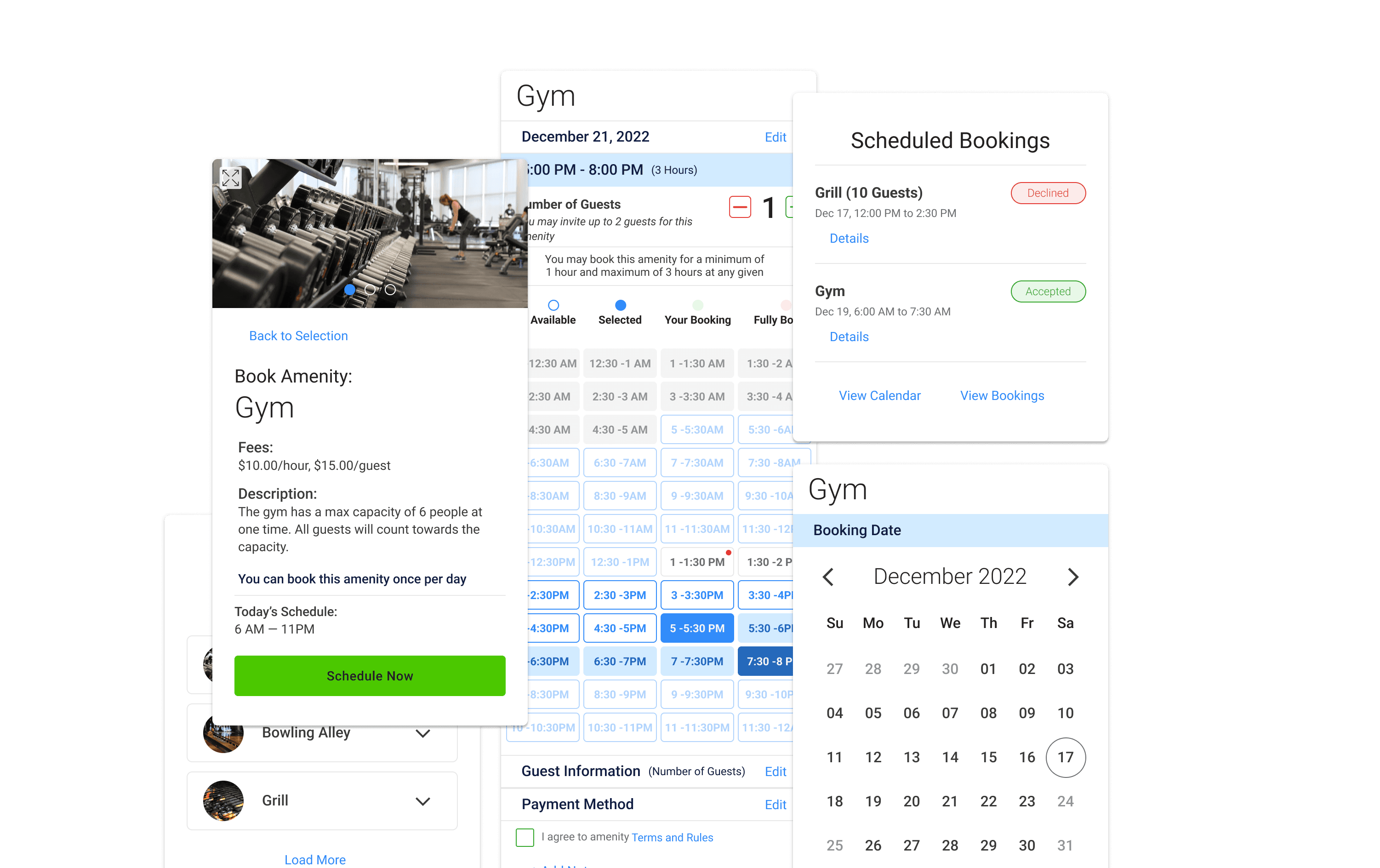
Residents struggled with the amenity booking platform across a few consistent pain points: unclear time slot availability, no way to view past bookings, and little guidance around guest accommodations. The confusion translated directly into support calls, putting pressure on both customer support teams and building administrators who were fielding the fallout.
On the admin side, the platform’s customization tools were disorganized and hard to navigate, making it difficult to tailor the experience for specific buildings. What should have been a flexible configuration layer had become a friction point that slowed down their day-to-day work.
Key Achievements:
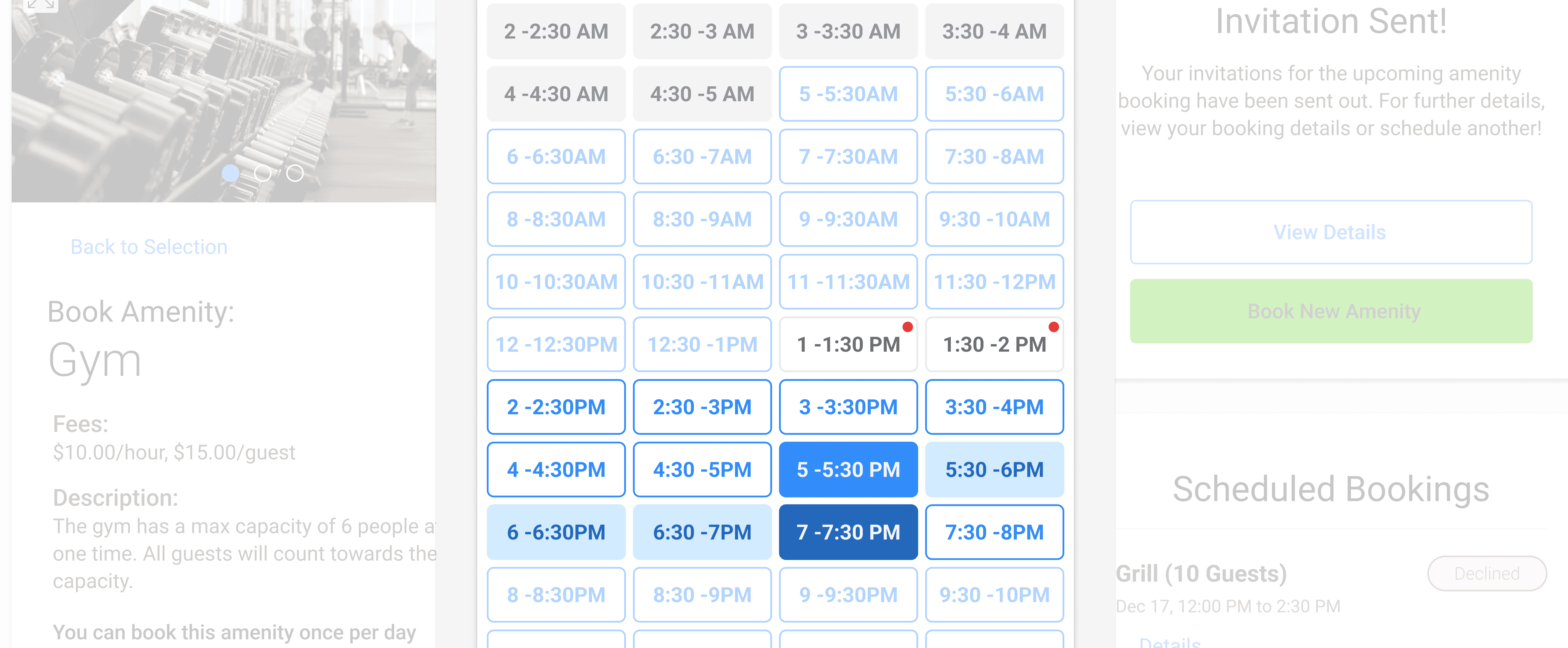
Engineered a time-slot UI with three visual states (available, booked, guest-compatible) reducing booking errors
Implemented 30-minute increment adjustments based on user research findings, improving usability
Designed “Select All” batch operations and accordion patterns to reduce admin task time
Deployed across hundreds of luxury properties serving diverse scheduling requirements
Skills Used
Solution
Redesigned the resident booking experience to improve clarity and usability.
Added clear indicators for fully booked, unavailable, and guest-compatible time slots.
Introduced a booking history feature to allow residents to view past reservations.
Simplified the admin interface with organized groupings and customizable settings to support tailored experiences.
Discovery
Leveraged modular design patterns to make the admin interface more scalable.
Integrated logic for guest-capacity slots directly into the booking flow.
Implemented a dynamic system for displaying booking rules and restrictions in real-time.
Developed a structured backend framework for hidden custom settings, ensuring flexibility without clutter.